

Why Window Replacement Is Worth Financing
Window financing allows homeowners to spread the cost of new windows across monthly payments instead of paying the full amount upfront. For most households in Nashville and across the United States, this approach makes a significant home upgrade far more accessible without requiring you to liquidate savings or delay an important project.
Key Takeaways
- Window financing covers multiple options: contractor payment plans, personal loans, home equity products, and manufacturer programs.
- Credit score requirements vary by lender, but many programs accept scores in the 580-620 range and above.
- Federal tax credits and state-level incentives can reduce the total amount you need to finance.
- 0% interest promotional financing is available through many window manufacturers and dealers, but it typically requires excellent credit and carries deferred interest risk if not paid off in time.
- Getting multiple quotes and understanding the total repayment cost matters as much as the monthly payment.
- Nashville homeowners have access to both national and local financing programs worth comparing before signing anything.
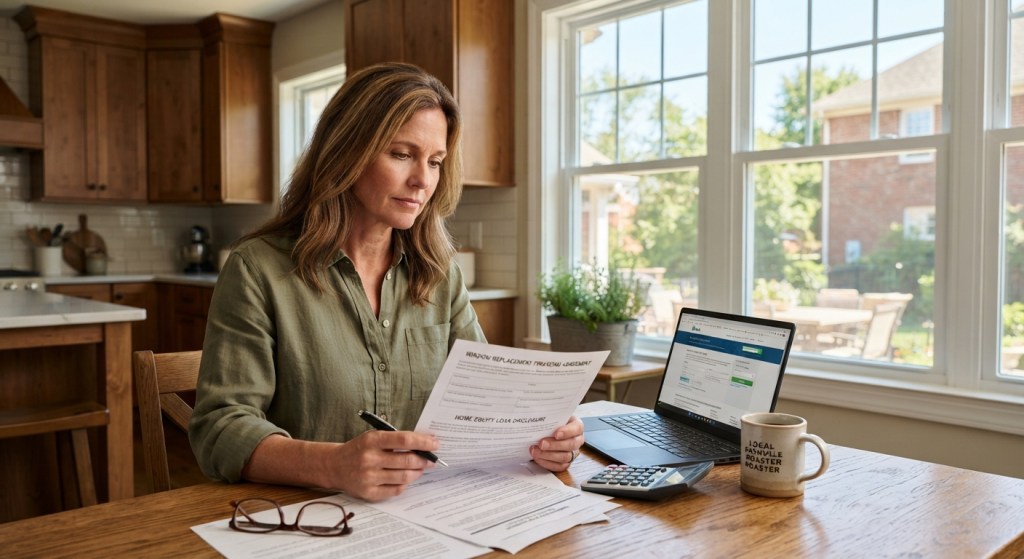
Replacing windows is one of the more expensive home improvement projects you can take on. Depending on the number of windows, the style you choose, and the labor involved, total project costs can run into the thousands of dollars fairly quickly. For Nashville-area homeowners, checking the window replacement cost nashville tn is a smart first step so you have a realistic budget figure before you approach any lender or contractor financing program.
The case for financing rather than waiting is straightforward. Old, drafty, or damaged windows raise your monthly energy bills, reduce indoor comfort, and can lead to moisture damage over time if seals have failed. Every month you delay a necessary replacement is a month you continue paying the energy penalty. In many cases, the monthly savings on heating and cooling costs can partially offset a monthly loan payment, making the net cost of financing lower than it appears at first glance.
Beyond energy savings, new windows add curb appeal and can increase resale value. According to Remodeling Magazine’s Cost vs. Value report, window replacement projects consistently rank among the top home improvements for return on investment, though exact figures vary by market and product type. Financing lets you capture that return sooner.
The Main Window Financing Options Available to You
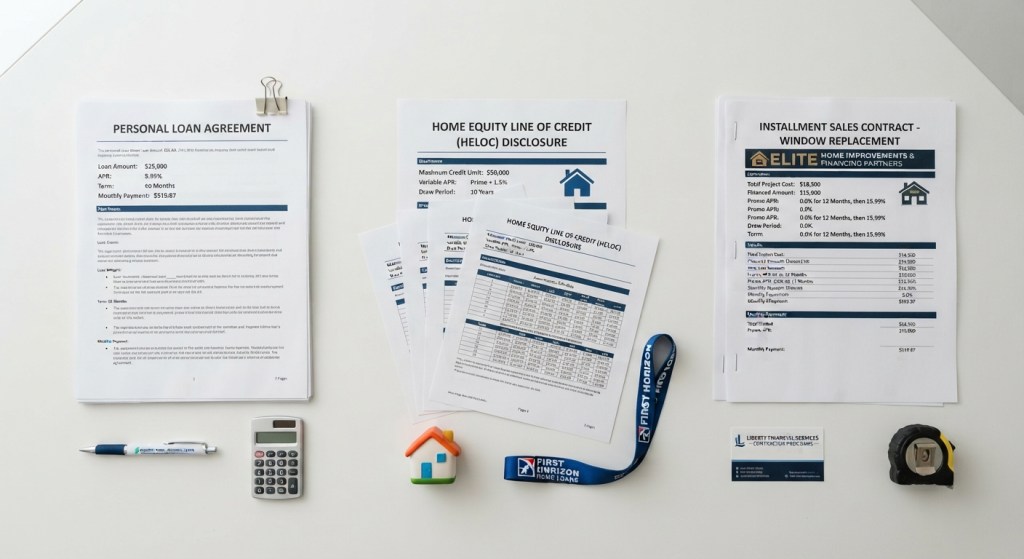
Not all financing programs work the same way. Understanding the differences helps you choose the option that costs the least over time and fits your current financial situation.
Contractor and Manufacturer Payment Plans
Many window companies, including Nashville Window Company, offer in-house financing or partnerships with third-party lenders. These programs are convenient because the financing is handled at the point of sale, often with a quick application and same-day approval decision. Promotional offers frequently include deferred interest periods, sometimes marketed as “same as cash” for 12 to 24 months.
The critical detail to watch: deferred interest is not the same as 0% interest. If you carry a balance past the promotional period, interest is often back-charged to the original purchase amount at a rate that can be significantly higher than a standard personal loan. Read the fine print before signing.
Personal Loans
Unsecured personal loans from banks, credit unions, and online lenders are another common route. You borrow a fixed amount, receive a fixed interest rate, and repay over a set term, typically 24 to 84 months. Because the loan is unsecured, your home is not used as collateral, which matters if you want to avoid the risk of foreclosure tied to a home equity product.
Credit unions in Tennessee often offer competitive rates to members, and many have streamlined application processes for home improvement loans. Comparing rates from at least three lenders before committing is worth the extra time.
Home Equity Loans and HELOCs
If you have built equity in your home, a home equity loan or home equity line of credit (HELOC) can provide access to larger amounts at lower interest rates than unsecured options. The Consumer Financial Protection Bureau provides a clear breakdown of how these products differ and what risks to consider.
A home equity loan gives you a lump sum at a fixed rate. A HELOC works more like a credit card with a variable rate and a draw period, followed by a repayment period. Both use your home as collateral, so the stakes are higher if you fall behind on payments.
FHA Title I Property Improvement Loans
The FHA Title I program is a federally backed option designed specifically for home improvements. It allows homeowners to borrow up to $25,000 for a single-family home without requiring home equity. Loans under $7,500 are unsecured. This can be a useful path if you have limited equity but a steady income and reasonable credit. Details on eligibility and approved lenders are available through HUD’s official program page.
Tax Credits and Incentives That Reduce What You Borrow
One of the most overlooked parts of planning window financing is accounting for the tax credits and incentives available before you decide how much to borrow. Federal and state programs can meaningfully reduce your net out-of-pocket cost.
Under the Inflation Reduction Act, the Energy Efficient Home Improvement Credit allows homeowners to claim up to 30% of the cost of qualifying energy-efficient windows, with an annual cap of $600 for windows specifically. This is a tax credit, meaning it directly reduces your federal tax liability, not just your taxable income. To qualify, windows must meet Energy Star Most Efficient criteria or specific U-factor and solar heat gain coefficient requirements.
For Tennessee residents, it is also worth understanding tennessee tax credits for window upgrades in 2026 before finalizing your financing amount. State and local incentives can stack with federal credits, reducing the principal you actually need to borrow.
Some utilities in Tennessee also offer rebates for energy-efficient window upgrades. Checking with your local utility provider before your project starts takes only a few minutes and could result in a rebate check that offsets part of your upfront payment.
How to Compare Financing Offers Without Getting Confused
When you receive multiple financing offers, comparing them accurately requires looking beyond the monthly payment. Here is a straightforward breakdown of the factors that matter most:
| Factor | Why It Matters |
|---|---|
| Annual Percentage Rate (APR) | The true cost of borrowing, including fees |
| Loan Term | Longer terms lower monthly payments but raise total cost |
| Promotional Period | Deferred interest risk if balance not cleared in time |
| Prepayment Penalty | Can you pay off early without a fee? |
| Origination Fee | Some lenders charge 1-6% of the loan amount upfront |
| Collateral Required | Secured vs. unsecured affects risk to your home |
A lower monthly payment is not always a better deal. A 60-month loan at 10% APR costs significantly more in total interest than a 36-month loan at the same rate. Running the numbers on total repayment cost, not just the monthly figure, is the most important step before you sign.
When professional window installation is part of your project, confirm whether labor costs are included in the financed amount or billed separately, since this affects how much you need to borrow from the start.
Credit Score Considerations and How to Improve Your Approval Odds
Your credit score plays a significant role in which financing options you qualify for and at what interest rate. Most conventional personal loan lenders prefer scores of 660 and above for competitive rates, though some specialized home improvement lenders work with scores as low as 580.
If your score needs work before you apply, a few targeted steps can help:
- Pay down credit card balances to below 30% of your credit limit, since utilization is a major scoring factor.
- Dispute any errors on your credit report through the three major bureaus: Equifax, Experian, and TransUnion.
- Avoid opening new credit accounts in the 90 days before applying for financing.
- Ask a lender about pre-qualification options that use a soft credit pull rather than a hard inquiry.
Even a modest score improvement can shift you into a lower rate tier, potentially saving hundreds of dollars over the life of a window loan.
What to Ask Nashville Window Company Before Financing
Before you commit to any financing arrangement through a window contractor, having a few specific questions ready will protect you from surprises:
- What is the exact APR, not just the promotional rate?
- Is the interest deferred or waived during the promotional period?
- What happens to interest if the balance is not paid off before the promotional period ends?
- Are there any origination fees or administrative charges?
- Can the financing be paid off early without a penalty?
- Does the financed amount include installation, permits, and disposal of old windows?
Getting answers to these questions in writing before you sign gives you a clear picture of the total commitment you are making.
Nashville Window Company works with homeowners at different budget levels and can walk you through the financing options available for your specific project scope. Understanding the full cost structure upfront makes the process significantly less stressful.
Things to Know
- Deferred interest financing is not the same as 0% interest. If you do not pay the full balance before the promotional period ends, interest is often charged retroactively on the original purchase amount at a high rate.
- Federal Energy Efficient Home Improvement Credits for windows are capped at $600 per year, regardless of how much you spend. Knowing this cap helps you plan how much to claim versus carry forward.
- FHA Title I loans do not require home equity, which makes them one of the few federally backed options available to newer homeowners or those who have not built significant equity yet.
- Some contractor financing programs are actually third-party consumer credit products with the contractor’s branding on them. Always ask who the actual lender is and read that lender’s terms directly.
- Your debt-to-income ratio matters as much as your credit score for many lenders. Even with a strong score, high existing monthly obligations can reduce the loan amount you qualify for or push your rate higher.
- Tennessee utility companies sometimes offer rebates for Energy Star certified window replacements independently of federal tax credits. These rebates do not require you to itemize on your taxes and can be applied immediately toward your project cost.
The Bottom Line on Window Financing
Replacing windows is a meaningful investment in your home’s comfort, efficiency, and long-term value. Window financing makes that investment accessible without requiring you to drain an emergency fund or wait years to save the full amount. The range of options available, from contractor payment plans and personal loans to home equity products and federal loan programs, means there is a realistic path forward for most financial situations and credit profiles.
The smartest approach is to nail down your total project cost first, account for any federal tax credits or Tennessee utility rebates that apply to your situation, and then compare at least two or three financing offers based on total repayment cost rather than monthly payment alone. That sequence puts you in control of the decision rather than reacting to whatever a salesperson presents at the point of sale.
Contact Nashville Window Company to get a clear project estimate and discuss which financing options are available for your specific replacement scope. Knowing your numbers before you apply puts you in the strongest possible position.
Frequently Asked Questions
Q: Can you do payment plans on window replacement?
Yes, payment plans for window replacement are widely available through contractors, manufacturers, and third-party lenders.
Many window companies offer in-house financing or partner with lenders to provide monthly payment options at the point of sale. You can also arrange your own payment plan through a personal loan or home equity product before you ever contact a contractor. The key is confirming the full repayment terms in writing, including the APR, loan term, and any deferred interest conditions, before signing.
Q: What credit score is needed to finance windows?
The minimum credit score needed depends on the financing type, but most programs work with scores starting around 580 to 620.
Unsecured personal loans from online lenders often set their floor at 580 to 600, while bank loans and home equity products typically prefer 660 or higher for competitive rates. Contractor financing programs vary widely since they use different third-party lenders. If your score is below 580, a co-signer, secured loan, or FHA Title I product may be your most practical path forward.
Q: How do most people pay for new windows?
Most homeowners pay for new windows through a combination of savings, contractor financing, and personal loans, depending on project size and available credit.
Smaller projects involving just a few windows are often paid out of pocket or with a credit card if a 0% introductory APR offer is available. Larger whole-home replacements are more commonly financed through contractor payment plans or home equity products. Tax credits and utility rebates are increasingly being factored into upfront budgeting, reducing the amount homeowners need to borrow or spend from savings.
Q: Can I get 0% interest financing for windows?
Yes, 0% interest financing for windows is available through many manufacturers and contractor financing programs, though it typically requires good to excellent credit.
These offers are usually promotional and run for 12 to 24 months. The important distinction is whether the 0% rate is a true waived-interest offer or a deferred-interest arrangement. With deferred interest, if any balance remains when the promotional period ends, interest accrues back to the original purchase date at the full rate, which is often 26% or higher. Always confirm in writing which type of offer you are receiving before you accept.
Q: What grants can you get for windows?
Direct grants for window replacement are limited for most homeowners, but several programs offer meaningful financial assistance depending on income level and location.
The U.S. Department of Agriculture’s Rural Development program offers grants and loans for low-income rural homeowners to make energy-efficiency improvements, including windows. The Weatherization Assistance Program, administered through the U.S. Department of Energy, provides free energy-efficiency upgrades to qualifying low-income households, and windows are an eligible improvement. Some local governments and community development organizations in Tennessee also run small grant programs for weatherization. Income limits apply to most of these programs, so checking eligibility early in your planning process is worthwhile.