

Window Company Reviews: How Nashville Homeowners Can Find a Trustworthy WIndow Installer in 2026
Reading window company reviews carefully before signing any contract is one of the smartest moves a homeowner can make. The right review tells you not just whether a company is pleasant to work with, but whether their installations hold up two winters later.
Why Window Company Reviews Have Never Mattered More
The replacement window industry is expanding fast. According to Report Prime (2024-2025), the window replacement and installation market is expected to grow from $33.35 billion in 2024 to $47.56 billion by 2031, at a compound annual growth rate of 5.20%. A separate analysis from Mordor Intelligence (2026) values the broader windows and doors market at $216.04 billion in 2025, projected to reach $278.36 billion by 2031.

That kind of growth attracts new entrants, some of which are not ready to deliver professional-grade results. More installers in the market means more variance in quality, which is exactly why reading detailed window company reviews has become a critical part of the buying process rather than an afterthought.
The good news is that overall satisfaction is high when homeowners do their homework. A This Old House survey (2025) found that 95% of homeowners reported satisfaction with their replacement windows, and 81% said the sales process was somewhat or very helpful (This Old House Survey, 2026). Those numbers reflect buyers who took time to vet their contractors, not those who hired the first company that knocked on their door.
On the supply side, the industry is performing well. Over half (55%) of window and door companies reported volumes growing in the fourth quarter of 2024, with average volumes across all companies growing 2.2% year over year (Window + Door Industry data, 2025). Revenue likewise increased, with an average year-over-year growth of 3.7% (Window + Door, 2025). A healthy industry generally means more competition for your business, giving you more leverage as a consumer to demand quality and accountability.
For a full view of how top manufacturers are performing under current market conditions, the 2025 Top Manufacturers report from Window + Door offers detailed benchmarking data worth reviewing.
What Separates a Trustworthy Review from a Misleading One
Not all reviews are created equal, and learning to read between the lines is a skill worth developing before you spend anywhere from $300 to $1,200 per window installed.
Red flags in online reviews:
- Reviews that mention only general satisfaction (“great company!”) without any specifics about the installation process or product performance.
- A sudden cluster of five-star reviews posted within a short period, which can indicate solicited or incentivized feedback.
- No responses from the company to negative reviews, suggesting they do not monitor or value customer feedback.
- Reviews that describe measuring errors, gaps around frames, or condensation between panes shortly after installation — these are quality control failures, not one-off incidents.
Green flags worth weighing:
- Reviewers who mention specific crew members or project managers by name, indicating accountability within the company.
- Mentions of follow-up visits or warranty service being honored without argument.
- Consistent praise across Google, Yelp, and the Better Business Bureau, not just one platform.
- Reviews that address how the company handled a problem, not just whether problems occurred.
For a broader look at how leading companies are rated by category, Fixr’s roundup of the best window companies provides a useful comparison across brands and service models.
Brand Comparison: Andersen, Pella, and the Alternatives
When you dig into window company reviews at the product level, two names come up constantly: Andersen and Pella. Both are American manufacturers with long track records, and both offer multiple product lines across different price points.
| Feature | Andersen | Pella | Milgard | Simonton |
|---|---|---|---|---|
| Entry price range (per window) | $300-$600 | $280-$650 | $200-$500 | $150-$450 |
| Signature material | Fibrex composite | Wood/clad/vinyl | Vinyl/fiberglass | Vinyl |
| Warranty coverage | 20-year limited | 20-year limited | Lifetime (some lines) | Lifetime (some lines) |
| Custom sizing | Yes | Yes | Yes | Limited |
| Best for | Energy performance | Aesthetics/wood look | West Coast climates | Budget-conscious buyers |
According to This Old House’s ranking of best window brands (2026), material preferences are shifting noticeably, with fiberglass growing from 25% to 29% of the market between 2024 and 2026. Fiberglass offers better dimensional stability than vinyl in temperature extremes, which matters for Nashville homeowners who deal with hot summers and occasional winter freezes.
For homeowners in Tennessee, it is also worth checking whether your chosen product qualifies for incentives by reviewing tennessee tax credits for window upgrades in 2026 can reduce your out-of-pocket costs significantly, particularly if you are upgrading to ENERGY STAR-certified products.
How to Evaluate Nashville-Specific Window Installers
National brand reviews only tell part of the story. The installer you hire in Nashville matters just as much as the window brand on the box. A premium Andersen window installed poorly will underperform a mid-range vinyl unit installed with precision.
When reading local window company reviews, prioritize these factors:
- Licensing and insurance: Tennessee requires contractors to be licensed through the Tennessee Department of Commerce and Insurance. Verify this directly rather than taking a company’s word for it.
- Manufacturer certification: Many brands offer certified installer programs. A certified installer typically receives additional training and can pass through extended warranty coverage to you.
- Time in business: Longevity in a local market is meaningful. A company that has operated in Nashville for ten or more years has a track record that reviews can reflect accurately.
- Written estimates: Reputable companies provide itemized written estimates. Vague quotes that lump labor and materials together make it harder to compare contractors fairly.
If budget is a concern, exploring window financing in nashville can make a full-house replacement project more manageable without forcing you to compromise on quality.
Timing, Pricing, and What to Expect from the Process
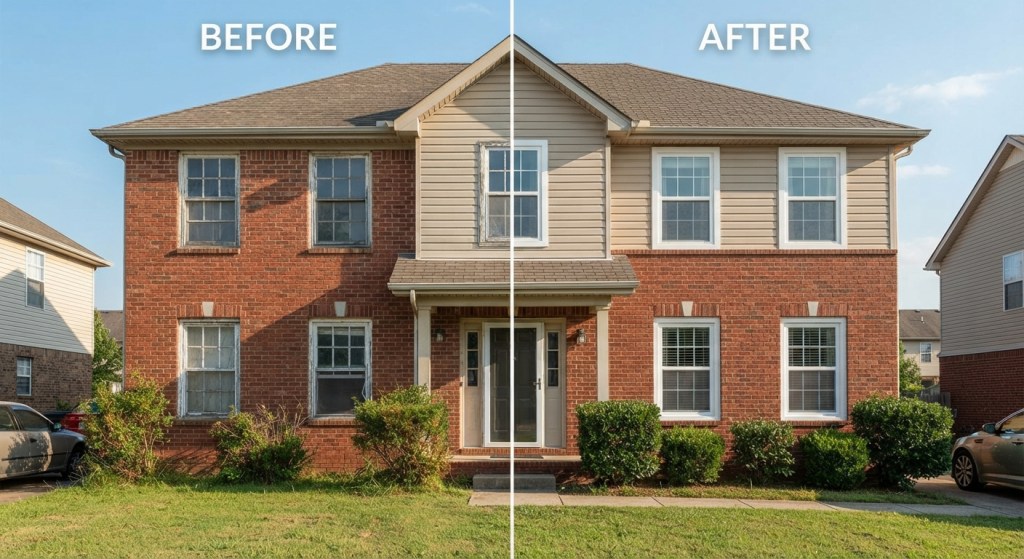
Price is one of the most common points of confusion when homeowners start reading window company reviews. The range is wide because project scope, materials, window count, and regional labor rates all vary.
What reviewers consistently note is that getting multiple quotes from local companies produces better outcomes than accepting the first offer. For Nashville homeowners, the quality of window installation workmanship often determines whether you get the full performance benefit of your investment, regardless of which brand you choose.
Timing also plays a role. Late fall and early winter tend to see lower demand in the window replacement industry, which can translate to shorter lead times and sometimes more competitive pricing as companies seek to maintain volume. Conversely, spring is peak season, and you may wait longer for a crew and find less flexibility on price.
Given that about 73% of window companies plan to raise prices in 2025 (John Burns Research and Consulting/Window + Door, March 2025), and that industry-wide revenue grew 3.7% year over year in 2024, waiting too long in hopes of a price drop is unlikely to pay off. Locking in quotes while you have them in hand is a practical approach.
The Window + Door benchmarking and statistics page provides ongoing industry data that can help you understand whether a quote you receive is in line with current market norms.
Patterns That Window Company Reviews Consistently Reveal
After you read enough reviews across platforms, patterns emerge that transcend any single company or market. Homeowners who report the highest satisfaction levels share a few consistent behaviors: they got at least three competing quotes, they asked specifically about the installation crew (not just the sales rep), and they confirmed the warranty terms in writing before signing.
Reviewers who report problems most often cite issues with post-installation follow-through: calls that go unreturned, service visits that get rescheduled repeatedly, or warranty claims that require escalation. These patterns show up in reviews of both large national chains and smaller local operators, which is why reading recent reviews rather than relying on a company’s aggregate score matters.
Nashville Window Company has built its local reputation precisely by addressing these pain points directly: clear communication from first measurement through final inspection, certified installation crews, and a process that prioritizes the homeowner’s experience at every stage. When you compare window company reviews across the Nashville market, consistency in post-installation service is the differentiator most likely to predict whether you will be happy two or three years from now.
Things to Know
- The window replacement market is competitive and growing fast, which means more options for homeowners but also more companies that may lack experience or accountability — always verify credentials independently.
- Fiberglass windows are gaining market share over vinyl, rising from 25% to 29% between 2024 and 2026 (This Old House analysis), and they tend to perform better in climates with wide temperature swings like Nashville’s.
- About 73% of window companies plan to raise prices in 2025, with an average increase of 3.6% (John Burns Research and Consulting/Window + Door, March 2025), so delaying a project is unlikely to save you money.
- A company’s response to negative reviews tells you more about their business practices than the negative review itself. A thoughtful, professional response signals accountability; silence or defensiveness signals the opposite.
- Manufacturer warranty and installer warranty are two separate things. Make sure you understand what each covers and who to contact if something goes wrong after installation.
- In 2026, 42% of homeowners researched window companies for at least three weeks before making a decision (This Old House, 2026). Taking your time is the norm, not the exception, and rushing the process is one of the most common sources of post-project regret.
Key Takeaways
- Verified third-party reviews matter more than star ratings alone — look for patterns in complaints about installation quality and follow-up service.
- According to a This Old House survey (2026), 42% of homeowners researched window companies for at least three weeks before committing, showing just how high the stakes feel.
- Material choice is shifting: fiberglass grew from 25% to 29% of the market between 2024 and 2026 (This Old House analysis, 2024-2026), making it a serious contender alongside vinyl.
- Price increases are coming: about 73% of window companies expect to raise prices in 2025, with an average increase of 3.6% (John Burns Research and Consulting/Window + Door, March 2025).
- Local installers often outperform national chains on customer service scores, especially when you compare post-installation support.
- Always verify licensing, insurance, and manufacturer warranty pass-through before you sign.
The Bottom Line on Window Company Reviews
Reading window company reviews thoroughly before committing to a project is not just due diligence; it is the single most reliable way to separate companies that deliver on their promises from those that look good on paper and disappear after the check clears. The data backs this up: homeowners who take at least three weeks to research their options (as 42% did in 2026, according to This Old House) report dramatically higher satisfaction rates than those who rush the process.
For Nashville homeowners specifically, the local installer you choose will shape your experience as much as the brand of window you select. Nashville Window Company combines certified installation crews, transparent pricing, and a post-installation support process built around the concerns that show up most often in negative reviews across the industry. Your action step is straightforward: gather at least three written quotes, read recent reviews on multiple platforms, verify licensing through the Tennessee Department of Commerce and Insurance, and then make your decision from a position of confidence rather than pressure.
Frequently Asked Questions
Q: What is the average cost to put new windows in a house?
The average cost to replace windows in a house typically ranges from $300 to $1,200 per window installed, depending on size, material, and labor rates in your area.
For a full home replacement covering 10 to 15 windows, most homeowners in the United States spend between $4,500 and $18,000 total. Vinyl windows sit at the lower end of that range, while fiberglass, wood-clad, and specialty shapes push costs higher. Labor accounts for a significant portion of the total, which is why getting itemized quotes from multiple local installers is essential before committing to a project.
Q: What is the cheapest time of year to replace windows?
Late fall and early winter, typically November through February, tend to offer the most favorable conditions for pricing and scheduling in the window replacement industry.
During these months, demand slows as fewer homeowners initiate large renovation projects, which means contractors are more likely to have availability and may offer more competitive pricing to maintain their installation volume. That said, with the majority of window companies planning price increases in 2025 (John Burns Research and Consulting/Window + Door, March 2025), the savings window may be narrower than in previous years. Locking in a quote from a reputable installer during the off-season is a practical strategy regardless of exactly when you plan to schedule the work.
Q: Which brand of windows is better, Andersen or Pella?
Neither Andersen nor Pella is universally better. The right choice depends on your priorities: Andersen tends to lead on energy performance and composite material innovation, while Pella is often preferred for its wood aesthetic options and design flexibility.
Andersen’s Fibrex composite material offers strong thermal performance and resists warping better than standard vinyl in extreme temperatures. Pella, on the other hand, offers a broader range of interior wood finishes that appeal to homeowners renovating older or historically styled homes. Both companies carry 20-year limited warranties on most product lines. Reviewing each brand’s specific product tier against your budget, climate needs, and aesthetic preferences will give you a clearer answer than any broad brand comparison. According to This Old House’s ranking of best window brands (2026), fiberglass products from multiple manufacturers are gaining ground, so do not limit your comparison to just these two names.
Q: Who is more expensive, Pella or Anderson?
Pella and Andersen are priced similarly at comparable product tiers, though Andersen’s higher-end lines, particularly those using Fibrex composite, can carry a slight premium over equivalent Pella vinyl or clad products.
At the entry level, both brands start in the $280 to $600 range per window before installation. Where the gap becomes more noticeable is at the premium tier: Andersen’s 400 Series and A-Series windows can run significantly higher than Pella’s equivalent Reserve or Lifestyle Series products, depending on configuration and customization. The installed cost also depends heavily on your local labor market and the complexity of your project. Always compare quotes that include installation, not just the window unit price, to get an accurate picture of the true cost difference between the two brands.
Q: Who is the number one window manufacturer in the United States?
Andersen Corporation is widely recognized as the largest window manufacturer in the United States by revenue and market presence, though rankings can shift depending on the metric used.
Andersen, headquartered in Bayport, Minnesota, has held a dominant position in the American window market for decades and consistently ranks at or near the top in independent studies including the Lifestory Research America’s Most Trusted Window Study (2024-2025). Pella Corporation is its closest rival by most measures, followed by manufacturers such as Milgard, Simonton, and JELD-WEN depending on the region and product category. The Window + Door 2025 Top Manufacturers report provides detailed industry rankings for homeowners and professionals who want to compare companies by specific performance metrics.