
Window Types
Casement Windows
Casement Windows: Superior Sealing Technology Delivering Maximum Ventilation and Energy Performance
Casement windows represent the gold standard for homeowners prioritizing both exceptional ventilation and peak energy efficiency. These side-hinged windows swing outward like doors, opening fully to capture maximum airflow while delivering tighter seals than any sliding window style. According to the U.S. Department of Energy, casement windows generally have lower air leakage rates than sliding windows because the sash closes by pressing against the frame, creating compression seals strengthened rather than weakened by wind pressure. With energy-efficient windows capable of reducing energy bills by 7-15%, casement windows stand among the best-performing options for minimizing heat loss while maximizing fresh air circulation.

Side-Hinged Outward Operation Mechanics
The defining characteristic of casement windows involves their side-mounted hinges allowing full outward swing. Unlike double-hung or slider windows with panels that slide past each other, casement windows pivot open like conventional doors, creating unobstructed apertures equal to the entire window size. This complete opening capability delivers ventilation performance unmatched by partial-opening window styles.
Most modern casement windows operate via crank mechanisms that fold away discretely when not in use. Turning the crank handle extends an arm pushing the window sash outward while simultaneously engaging multi-point locking systems when closing. This mechanical advantage provides smooth, effortless operation requiring minimal physical effort, making casement windows particularly suitable for individuals with limited upper body strength or mobility challenges.
Hinge Placement Options:
Left-hinged configurations swing open from right to left, while right-hinged units operate in the opposite direction. Selection typically depends on room layout, furniture placement, exterior obstructions, and prevailing wind patterns. Opening windows into prevailing breezes maximizes natural ventilation efficiency by directing airflow deep into interior spaces.
Some manufacturers offer top-hinged casement variants called awning windows. While technically distinct, awning windows share the compression seal advantages of side-hinged casements while providing rain protection during ventilation. The top hinge allows outward opening even during light precipitation, protecting interiors while maintaining fresh air circulation.
Ideal Applications for Maximum Benefit
Casement windows deliver particular value in specific locations and applications where their unique characteristics provide distinct advantages over alternative window styles.
Hard-to-Reach Locations
The crank operation makes casement windows ideal for positions difficult to access manually. Above kitchen sinks, behind bathtubs, over countertops, or in other locations requiring extended reach, the simple crank mechanism provides easy operation from ground level without awkward stretching or climbing.
Egress Requirements
Building codes often mandate bedroom windows meet minimum egress requirements allowing emergency escape. Casement windows with their full-opening capability readily satisfy these requirements, providing unobstructed exit paths during emergencies while delivering superior performance during normal operation.
Contemporary Architecture
The clean lines and unobstructed glass characteristic of casement windows complement modern and contemporary architectural styles. Without horizontal rails or mullions interrupting sightlines, casement windows create sleek, minimalist aesthetics increasingly popular in new construction and renovation projects.
Coastal and High-Wind Environments
The compression seal mechanism that strengthens under wind pressure makes casement windows particularly suitable for coastal locations or exposed sites experiencing strong prevailing winds. Where other window types might develop air leaks under wind pressure, properly installed casement windows actually seal tighter.
Material and Finish Options
Frame material selection significantly influences performance, maintenance requirements, aesthetics, and cost.
Vinyl Casement Windows
Vinyl represents the most popular frame material, chosen for affordability, energy efficiency, and minimal maintenance. Quality vinyl never requires painting, resists moisture damage, and provides excellent thermal resistance. Modern vinyl formulations incorporate UV stabilizers preventing fading and degradation even under intense sun exposure.
Vinyl casement windows typically cost $300-$700 per window installed for standard sizes, delivering exceptional value relative to performance. This cost-effectiveness allows homeowners to upgrade multiple windows while maintaining reasonable project budgets.
Wood Casement Windows
Traditional wood frames offer timeless beauty and authentic character particularly appropriate for historic homes or premium new construction. Wood accepts paint and stain finishes enabling perfect color coordination with architectural elements and interior decor.
However, wood requires periodic maintenance including repainting or refinishing every 5-7 years, proves vulnerable to moisture without proper sealing, and costs substantially more than vinyl alternatives. Wood casement windows typically range $500-$1,200 or more per window installed.
Fiberglass and Composite
Advanced materials combine aesthetic appeal with superior performance and durability. Fiberglass frames offer exceptional strength supporting large glass expanses, dimensional stability preventing warping, and resistance to moisture, insects, and temperature extremes.
Pricing typically falls between premium vinyl and entry-level wood depending on specific products and manufacturers. The long-term durability and minimal maintenance requirements often justify incremental costs.
Exceptional Ventilation Performance
Casement windows excel at capturing outdoor breezes and directing airflow through interior spaces. When fully opened, the entire window area functions as an unobstructed ventilation aperture, allowing maximum air volume transfer impossible with double-hung windows limited to 50% opening or sliders constrained by track configurations.
Strategic placement maximizes natural ventilation benefits. Installing casement windows on opposite walls creates cross-ventilation pathways where air enters through one window, flows through the space, and exits via another opening. This passive cooling technique reduces air conditioning loads during moderate weather while improving indoor air quality through regular air exchanges.
According to recent market research, the global energy-efficient windows market reached $22.8 billion in 2024 and is expected to reach $42.8 billion by 2033, exhibiting a 6.9% compound annual growth rate. Casement windows contribute significantly to this growth due to their superior ventilation and sealing capabilities driving consumer adoption.
Wind Channeling Benefits: The outward-swinging sash acts like a wing, catching breezes and directing airflow into rooms. This channeling effect proves particularly valuable in locations with consistent prevailing winds. Positioning the window to intercept these airflows maximizes natural ventilation without relying on mechanical systems.
Superior Energy Efficiency Through Compression Sealing
The primary energy efficiency advantage of casement windows stems from their compression seal mechanism. When closing, the sash presses firmly against the frame creating tight, continuous seals around the entire perimeter. This compression increases as wind pressure pushes against the closed window, actually strengthening seals rather than compromising them as occurs with sliding windows where wind can force air through gaps between sliding panels.
The U.S. Department of Energy explicitly notes that casement and awning windows generally have lower air leakage rates than sliding windows because the sash closes by pressing against the frame. This fundamental design advantage translates to measurable energy savings through reduced infiltration and exfiltration.
Low-E Glass Performance: Modern casement windows incorporate Low-emissivity glass coatings that reflect infrared radiation while allowing visible light transmission. These microscopically thin metallic layers dramatically reduce heat transfer through glass surfaces. According to industry data, energy-efficient windows reduce energy bills by 7-15%, with ENERGY STAR certified windows lowering household energy bills by an average of 12%.
Summer performance proves particularly impressive as Low-E coatings reject exterior solar heat, reducing cooling loads. The Environmental Protection Agency confirms that window awnings help reduce solar heat gain by up to 65% for south-facing windows and up to 75% for west-facing windows, resulting in a 20% decrease in air-conditioner usage during summer months.
Argon Gas Insulation: Premium casement windows feature argon or krypton gas fills between glass panes rather than regular air. These inert gases provide superior insulation because their molecular density slows thermal transfer. Windows with double or triple panes separated by insulating gas like argon reduce heat transfer significantly, providing much better insulation than single-pane windows while helping lower energy bills year-round.
The energy-efficient windows market analysis confirms that double-pane construction currently dominates residential applications. Looking forward, triple-pane glass adoption continues increasing among homeowners pursuing maximum efficiency, offering one additional pane and air space filled with argon gas, plus three opportunities to include Low-E coatings versus only two on dual-pane glass.
Unobstructed Views and Natural Light
With no horizontal rails, meeting rails, or center dividers interrupting glass area, casement windows provide completely unobstructed views of outdoor environments. The full glass panel creates picture-window-like visual access while maintaining ventilation capability impossible with fixed windows.
This clear sightline advantage proves particularly valuable when windows overlook desirable scenery including gardens, water features, landscapes, or architectural elements. The seamless glass expanse showcases views without visual interruptions, enhancing the connection between interior living spaces and outdoor environments.
The abundant natural light admitted through large, uninterrupted glass surfaces reduces artificial lighting requirements during daylight hours. Studies demonstrate that homes with abundant natural light reduce electrical lighting energy consumption by 30-50%, contributing to overall energy savings beyond the thermal performance benefits of efficient glazing and framing.
Enhanced Security Features
Casement windows incorporate multi-point locking mechanisms engaging at several locations along the frame perimeter when closed. This distributed locking system provides superior security compared to single-point latches common on sliding windows. The hooks and pins integrated into casement locking systems resist prying and forced entry attempts.
When fully closed and locked, casement windows prove exceedingly difficult to breach from exterior positions. All operating mechanisms reside on interior surfaces, preventing tampering from outside. The compression seal design means there are no accessible gaps or lift points that could be exploited for unauthorized entry.
Material and Finish Options
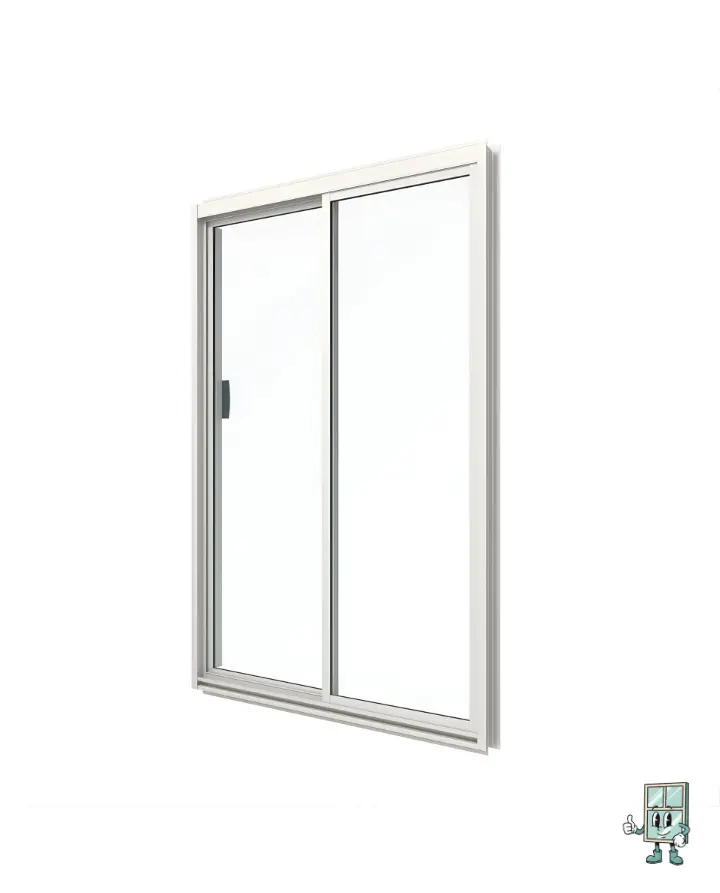
Proper maintenance ensures your 2 lite slider windows provide decades of reliable service:
Regular Cleaning: Clean tracks and rollers quarterly to remove dirt and debris that can interfere with smooth operation. Wipe down frames and glass with mild soap and water to maintain appearance and prevent buildup that could affect seals.
Lubrication: Apply silicone-based lubricant to tracks and rollers annually. Avoid petroleum-based products that can attract dirt and damage vinyl components.
Weatherstripping Inspection: Check weatherstripping annually for wear or damage. Most modern windows feature replaceable weatherstripping that can be easily updated if compression or deterioration occurs.
Hardware Adjustments: Tighten screws on locks and handles as needed. If windows become difficult to operate, professional adjustment of roller assemblies may restore smooth function.
Professional Installation Ensures Performance
Proper installation proves critical for realizing the full energy efficiency and performance potential of casement windows. Incorrect installation compromises sealing, creates air leakage pathways, and may interfere with smooth operation.
Window installation near you provides comprehensive services including accurate measurement accounting for rough opening irregularities, proper shimming and leveling ensuring frame alignment, appropriate insulation preventing thermal bridging, weatherproof sealing protecting against water infiltration, and adjustment of operating mechanisms for smooth, effortless function.
Installation timelines vary based on project scope. Single casement window replacements typically complete within several hours. Whole-home projects involving multiple windows may extend one to three days depending on quantity, accessibility, and any necessary trim modifications.
Return on Investment and Energy Savings
Casement window replacements deliver measurable returns through multiple value channels. Energy savings accumulate over decades of window lifespan, with reduced heating and cooling costs offsetting initial investment. According to the 2025 Journal of Light Construction data, the national average return on investment for wood window replacement reaches 70%.
Beyond direct energy savings, casement windows enhance home value, improve comfort through better temperature control and ventilation, reduce HVAC system wear extending equipment life, and provide aesthetic improvements increasing marketability.
Federal tax credits cover up to 30% of costs with a maximum credit of $600 on windows meeting ENERGY STAR Most Efficient criteria for 2025 installations. These incentives significantly offset initial investment while providing ongoing energy savings throughout the window’s 20-30 year lifespan.
Making the Smart Investment Decision
Casement windows represent intelligent investments for homeowners prioritizing ventilation, energy efficiency, unobstructed views, and contemporary aesthetics. The compression seal mechanism delivers measurable energy savings, the full-opening capability provides superior ventilation, security features protect your family and property, and minimal maintenance requirements reduce long-term ownership costs.
Window services near you offer complimentary consultations providing expert guidance on casement window selection, placement, and installation. Experienced specialists assess your specific requirements, explain available options with transparent pricing, and answer questions ensuring confident decision-making.
FREQUENTLY ASKED QUESTIONS (FAQ)
What makes casement windows more energy efficient than other types?
Casement windows are more energy efficient because their side-hinged design creates compression seals that press firmly against the frame when closed, with seals actually strengthening under wind pressure rather than weakening. According to the U.S. Department of Energy, casement and awning windows generally have lower air leakage rates than sliding windows. Energy-efficient windows reduce energy bills by 7-15%, with ENERGY STAR certified windows lowering household bills by an average of 12%. The compression seal mechanism combined with Low-E glass coatings and argon gas fills delivers superior thermal performance impossible with sliding window designs.
Can casement windows be installed in any room?
Yes, casement windows work well in virtually any room but excel in specific applications. They are ideal for hard-to-reach places above kitchen sinks, bathtubs, or countertops due to easy crank operation. Bedrooms benefit from their full-opening egress capability meeting building code requirements. Living rooms and home offices appreciate unobstructed views and maximum ventilation. Bathrooms utilize their superior sealing and ventilation combination. Coastal locations value their wind-resistant compression seals. However, casement windows require exterior clearance for outward swing, so locations adjacent to walkways, decks, or landscaping may need alternative styles.
How do casement windows provide better ventilation than other windows?
Casement windows deliver superior ventilation because they open fully to 90 degrees, providing unobstructed apertures equal to the entire window size for maximum airflow. In comparison, double-hung windows open only 50% (one sash at a time), and sliding windows are limited by track configurations typically offering 50% or less opening. The outward-swinging sash acts like a wing catching breezes and channeling airflow deep into interior spaces. When positioned to intercept prevailing winds, casement windows create natural ventilation that reduces air conditioning loads during moderate weather while improving indoor air quality through regular air exchanges.
What maintenance do casement windows require?
Casement windows require minimal maintenance due to their simple design and quality materials. Clean glass and frames quarterly with mild detergent and soft cloths. Inspect and clean weep holes ensuring proper drainage. Lubricate hinges, crank mechanisms, and locking points annually using silicone-based lubricants (avoid petroleum products). Tighten hardware screws as needed. Inspect weatherstripping annually for wear and replace if showing compression or detachment. Vinyl frames never require painting and resist moisture damage. If windows develop operational issues, professional service can adjust mechanisms and replace worn components. Proper maintenance ensures 20-30 year lifespan with consistent performance.
Upgrade Your Home With Trusted Window Replacement
Ready to upgrade your home with energy-efficient casement windows delivering superior ventilation and measurable utility savings?
Contact window installation near you today to schedule your free in-home consultation.