

Low-E Glass Explained: Is It Worth the Investment for Nashville Homeowners?
Low-E glass is a type of energy-efficient glazing coated with ultra-thin metallic layers that reflect heat while allowing natural light to pass through, reducing energy transfer through your windows by up to 50%. For homeowners in the Nashville area dealing with hot, humid summers and chilly winters, this technology can translate into real savings on your utility bills year after year.
Key Takeaways
- Low-E glass can cut your home’s energy consumption by up to 30% compared to standard windows, saving 1,500–2,000 kWh per year.
- The coating blocks a significant portion of UV radiation, protecting your flooring, furniture, and fabrics from sun damage.
- Low-E windows last 25–30 years versus 15–20 years for standard glass, improving your long-term return on investment.
- Tennessee’s mixed climate makes dual-season performance critical, and Low-E coatings are engineered to deliver in both heating and cooling conditions.
- Most new U.S. homes built in 2025 come with Low-E windows as the default glazing option.
- Upgrading to Low-E glass can reduce HVAC strain and extend your system’s lifespan by 5–7 years.
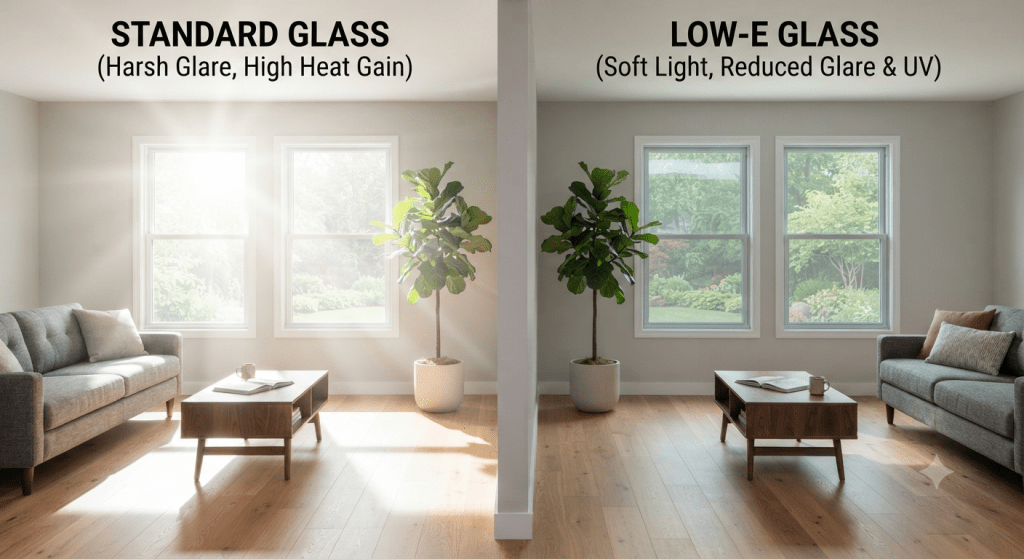
What Low-E Glass Actually Is and How the Coating Works
The term “Low-E” stands for low-emissivity. Emissivity refers to a material’s ability to emit thermal radiation. Standard glass has a relatively high emissivity, meaning it radiates heat easily in both directions. A Low-E coating changes that dynamic.
The coating itself is made from ultra-thin layers of silver or tin oxide, applied directly to the glass surface during manufacturing. These metallic layers are so thin they are invisible to the naked eye, yet they are effective enough to reflect infrared radiation (heat energy) back to its source. In summer, that means outdoor heat gets reflected away from your home. In winter, the heat your furnace generates stays inside rather than escaping through the glass.
There are two primary types of Low-E coatings worth knowing:
- Hard-coat (pyrolytic) Low-E: Applied while the glass is still molten, this coating is more durable but slightly less efficient. It is often used in colder climates where solar heat gain is desirable.
- Soft-coat (sputtered) Low-E: Applied in a vacuum chamber after the glass is manufactured, this coating offers superior energy performance and is sealed inside double or triple-pane units to protect it. This is the more common choice for mixed climates like Middle Tennessee.
The National Fenestration Rating Council provides standardized performance ratings for windows, including U-factor and Solar Heat Gain Coefficient (SHGC), both of which are directly influenced by the type of Low-E coating used. Understanding these numbers helps you compare products accurately, and you can find more detailed insights on our blog.
Why Tennessee’s Climate Makes Low-E Glass a Practical Choice
Nashville and the surrounding region experience a climate that stresses windows from both ends. Summers regularly push past 90°F, placing heavy demand on air conditioning. Winters, while milder than northern states, still bring enough freezing temperatures to require consistent heating from November through February.
Standard single-pane or older double-pane windows without Low-E coatings struggle to perform well in both seasons. You end up with cold spots near windows in January and rooms that feel like greenhouses in July. Low-E glass addresses both problems within the same unit.
According to the U.S. Department of Energy, heat gain and heat loss through windows account for 25–30% of residential heating and cooling energy use. Upgrading to Low-E windows can cut that figure significantly, which adds up fast given Nashville’s extended cooling season.
For homeowners considering specific installations, the how to choose the right bedroom windows for your home 2026 guide resource from Nashville Window Company covers local considerations that are directly relevant to selecting the right glazing package for Middle Tennessee properties.
If you are also weighing different window styles alongside your glazing upgrade, the picture windows pros and cons page breaks down how frame style and glass type interact to affect overall energy performance.
Energy Savings, UV Protection, and HVAC Benefits: The Numbers Behind the Claims
The performance claims around Low-E glass are backed by measurable data. Homeowners who upgrade from standard double-pane windows to Low-E units can expect:
| Benefit | Estimated Impact |
|---|---|
| Annual energy savings | 1,500–2,000 kWh per year |
| CO2 reduction | 1,000–1,400 lbs annually |
| Heat loss reduction | Up to 50% compared to standard glass |
| HVAC lifespan extension | 5–7 additional years |
| Window lifespan | 25–30 years vs. 15–20 for standard glass |
| UV ray blockage | Significant reduction in solar UV penetration |
Beyond the thermal benefits, the UV-blocking property of Low-E glass is one of the most underappreciated features. Prolonged UV exposure fades hardwood floors, discolors upholstered furniture, and damages artwork. Homeowners who have spent money on quality interior finishes often find that Low-E windows pay for themselves in reduced replacement and restoration costs alone.
There is also a comfort element that does not show up directly on energy bills. Rooms with Low-E windows maintain more consistent temperatures throughout the day, reducing the hot and cold spots that make certain areas of a home uncomfortable. This matters especially in open floor plans where large glass areas face south or west.
For homeowners who want to understand what poor window performance actually costs over time, the 5 window problems homeowners ignore that cost thousands later article from Nashville Window Company outlines the financial consequences of delaying window upgrades.
Cost, Warranties, and What to Expect When Buying
Low-E windows typically cost 10–15% more than comparable non-coated windows. On a full-house replacement project of 15–20 windows, that premium might range from $300 to $800 depending on window size, frame material, and the specific Low-E coating selected. Given the energy savings and extended lifespan, most homeowners recover that additional investment within a few years through reduced utility bills.
It is worth understanding what your warranty covers before you commit. Soft-coat Low-E coatings are sealed inside the insulated glass unit (IGU), so they are protected from physical damage. However, if the IGU seal fails, argon gas escapes and condensation can form between the panes, diminishing performance. A solid manufacturer warranty should cover seal failure for at least 10 years, with many premium brands offering 20-year or lifetime coverage.
The window warranties explained resource walks through exactly what these warranty terms mean in plain language, which is essential reading before signing off on a window contract.
The Low-E glass market itself is growing rapidly, valued at $14.63 billion in 2024 and projected to reach $29.25 billion by 2035 according to industry research. That growth is driven partly by building code requirements and partly by homeowner demand. The EPA’s ENERGY STAR program certifies windows that meet regional performance thresholds, and Low-E glass is a core requirement for certification in most U.S. climate zones, including the one covering Tennessee.
Choosing the Right Low-E Option for Your Home
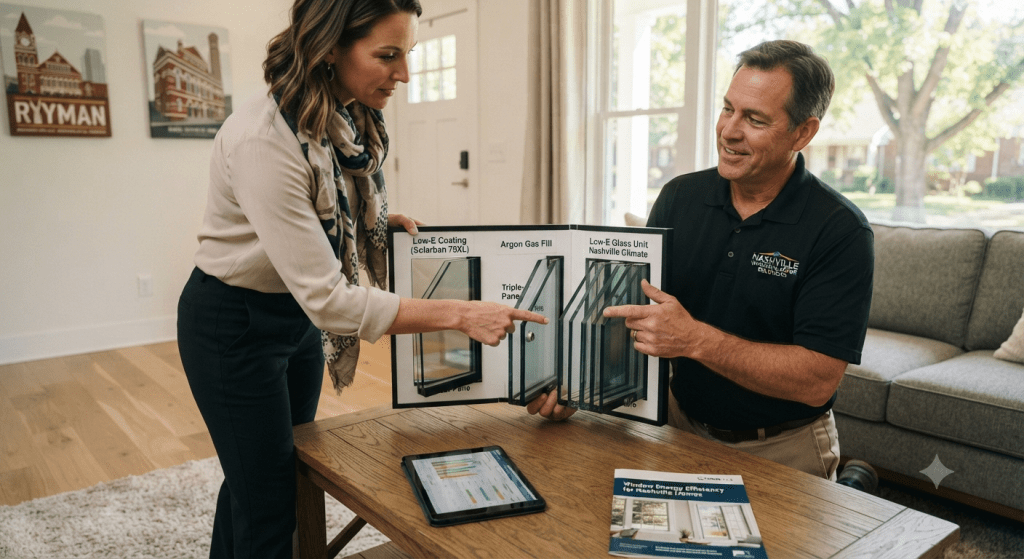
Not every Low-E product is the same, and choosing the wrong SHGC rating for your orientation and climate can reduce effectiveness. In Nashville, homes with large south-facing windows benefit from a slightly higher SHGC to capture passive solar heat in winter, while west-facing windows often need a lower SHGC to prevent afternoon overheating in summer. A knowledgeable installer will perform a site assessment and recommend the appropriate coating for each exposure.
When shopping for bedroom replacements specifically, considerations about how glazing affects sleep quality extend well beyond energy performance, as detailed in resources focused on the intersection of window selection and home comfort.
For homeowners who want to stay current on window technology trends and installation best practices in Middle Tennessee, the Nashville Window Company window installation in franklin tn 2026 guide regularly publishes updated content on topics like glazing upgrades, installation timelines, and local rebate programs.
According to Mayo Clinic research on indoor environment quality, temperature consistency and reduced drafts contribute to better sleep and reduced respiratory discomfort, which connects directly to the performance benefits of well-insulated windows in bedrooms and living spaces.
Things to Know
- Low-E coatings are invisible. You cannot tell by looking at a window whether it has a Low-E coating, so always ask for the NFRC label and confirm the U-factor and SHGC ratings in writing.
- Not all Low-E glass performs the same in both seasons. Hard-coat and soft-coat versions have different performance profiles, and the wrong choice for your climate can undercut your savings.
- Low-E coatings do not significantly reduce visible light transmission. Natural brightness in your home is preserved even as heat and UV are reduced.
- Argon or krypton gas fills between panes enhance the performance of Low-E coatings. Always confirm the gas fill type when reviewing quotes.
- Low-E windows qualify for the federal Residential Clean Energy Credit and Energy Efficient Home Improvement Credit, potentially reducing your tax liability in the year of installation.
- Seal failure on Low-E IGUs is the most common long-term issue, and understanding the details around protection coverage is crucial when you review different manufacturer offerings on the market.
Frequently Asked Questions
Q: Is Low-E glass worth the extra money?
For most U.S. homeowners, yes, Low-E glass delivers a positive return on investment through energy savings, extended HVAC life, and UV protection.
The 10–15% premium over standard windows is typically recovered within a few years through reduced utility costs. In a climate like Nashville’s, where both heating and cooling demands are significant, the payback period is often shorter than in milder regions.
Q: What is the downside of Low-E glass?
The main downsides are higher upfront cost and potential seal failure that leads to fogging between panes over time.
The manufacturing complexity of soft-coat Low-E units means they must be sealed inside IGUs, and if that seal degrades, the window’s performance drops noticeably. Choosing a brand with a strong warranty helps manage this risk.
Q: Are Low-E windows more expensive?
Yes, Low-E windows typically cost 10–15% more than comparable standard double-pane windows.
On a full home replacement project, that translates to a few hundred dollars of additional cost. Given the energy savings, UV protection, and longer product lifespan, most homeowners find the premium justified within the first few years of ownership.
Q: How much of a difference do Low-E windows make?
Low-E windows can reduce heat loss by up to 50%, lower annual energy use by 1,500–2,000 kWh, and cut CO2 emissions by 1,000–1,400 lbs per year.
In practical terms, Nashville homeowners often notice lower summer cooling bills and more comfortable rooms near large glass areas. The UV blocking