

Best Windows for Nashville Craftsman Bungalows: Style, Size & Performance
The best windows for Nashville Craftsman bungalows combine period-accurate aesthetics with modern energy performance suited to Tennessee’s mixed climate. Double-hung and casement styles with divided light grilles are the most historically appropriate choices, while vinyl and fiberglass frames offer the durability modern homeowners need.
Craftsman bungalows are among the most beloved architectural styles in Nashville’s older neighborhoods, from East Nashville to Sylvan Park. These homes were built predominantly between 1905 and 1930, and their windows are a defining design element. Replacing or upgrading them is one of the highest-impact projects a homeowner can take on, both for curb appeal and long-term energy savings. But there are real trade-offs between authenticity, budget, and performance that every bungalow owner should understand before making a decision.
Why Window Choice Matters More in Craftsman Homes Than Other Styles
In a standard suburban ranch or new construction home, windows are largely interchangeable. In a Craftsman bungalow, they are a structural part of the visual language. The original Craftsman style emphasized handcrafted detail, natural materials, and honest construction. Windows in these homes typically featured:
- Wide, low-profile frames that matched horizontal sightlines
- Divided light grilles, often in a “6-over-1” or “4-over-1” pattern
- Wood construction with painted or stained finishes
- Grouped or paired windows to maximize natural light
Replacing these with the wrong style, say a plain picture window or a sliding vinyl unit, immediately disrupts the architectural character and can reduce resale value in historic neighborhoods. Nashville’s Metro Historic Zoning Commission has guidelines that apply in certain districts, which means some homeowners may face restrictions on what they can legally install. Always verify whether your property falls under any overlay zone before purchasing new windows.
The Best Frame Materials for Nashville’s Climate
Nashville sits in USDA Hardiness Zone 7a and experiences significant weather variation, with summer temperatures regularly topping 90°F, cold snaps dropping into the teens in winter, and an annual average rainfall over 47 inches. This means your window frames need to handle thermal expansion, humidity, and UV exposure year after year.
Here is a straightforward comparison of the four main frame materials for Craftsman bungalow windows:
| Frame Material | Authentic Look | Energy Efficiency | Maintenance | Typical Cost Per Window |
|---|---|---|---|---|
| Wood | Excellent | Good (with proper sealing) | High | $400 to $900+ |
| Vinyl | Moderate | Very Good | Low | $150 to $500 |
| Fiberglass | Very Good | Excellent | Low | $350 to $800 |
| Aluminum-Clad Wood | Excellent | Good to Very Good | Moderate | $500 to $1,100+ |
For most Nashville Craftsman bungalow owners who want the look of wood without the upkeep, fiberglass is the strongest recommendation. Fiberglass expands and contracts at nearly the same rate as glass, which reduces seal failure over time. It can also be painted to match any period-appropriate color, and quality fiberglass profiles can be manufactured to closely mimic wood grain texture.
Vinyl remains the most budget-friendly option and performs very well thermally, but standard vinyl window profiles are noticeably thicker and blunter in profile, which can look out of place on a home built in 1918. Some manufacturers now produce “thin-line” vinyl windows that better approximate historic proportions, so it is worth asking your installer about those options specifically.
The National Fenestration Rating Council provides standardized energy ratings for all residential windows. When comparing products, look for a U-Factor of 0.30 or lower and a Solar Heat Gain Coefficient (SHGC) between 0.25 and 0.40 for Nashville’s climate. Lower SHGC values help reduce cooling loads in hot Tennessee summers.
Double-Hung vs. Casement: Which Opening Style Fits a Craftsman?
This is where style history and practical function intersect most directly. The original Craftsman bungalows of the early 20th century almost exclusively used double-hung windows. This was partly a manufacturing standard of the era and partly a stylistic preference that aligned with the horizontal emphasis of the architecture.
Casement windows, which swing outward on a hinge like a door, became more common in mid-century design and are more closely associated with Craftsman’s successor styles. That said, casement windows are often recommended for side rooms or kitchen areas where easy ventilation and cleaning access are priorities.
If you are trying to decide between these two styles for your specific Nashville home, the detailed breakdown at double hung vs casement windows nashville walks through the functional and aesthetic differences in the local context.
For strict Craftsman authenticity, double-hung windows with divided lights are the correct choice for primary facades and street-facing rooms. Casements can work in less visible locations, such as rear additions or bathrooms, without compromising the home’s visual integrity.
Grille Patterns and Glass Options: Getting the Details Right
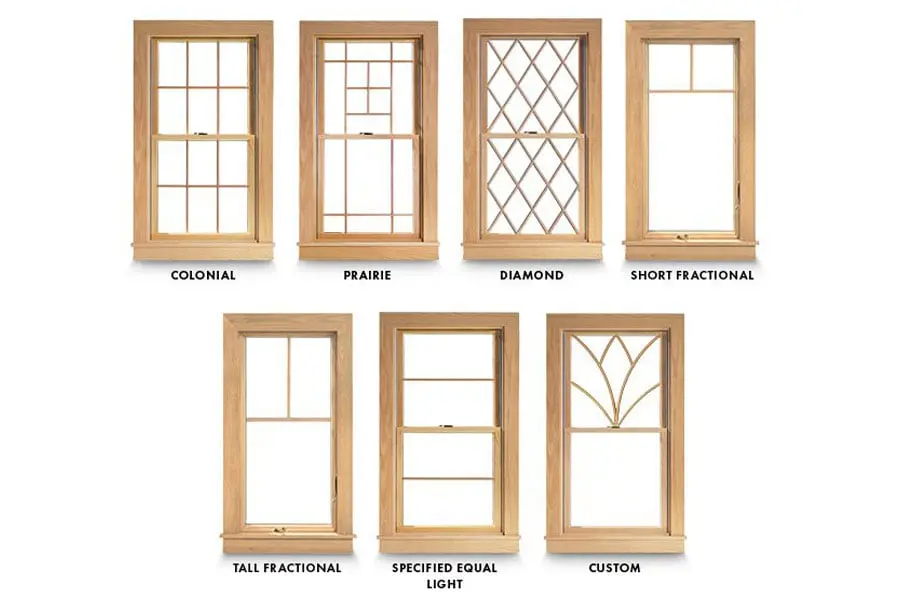
The grille pattern on a Craftsman bungalow window is not decorative in the way a superficial add-on would be. It was a direct result of original manufacturing processes, where large panes of glass were expensive and small panes were assembled into sash units. The divided light pattern carries that history forward.
Common authentic grille patterns for Craftsman homes include:
- 6-over-1: Six small panes in the upper sash, one large pane in the lower
- 4-over-1: Four small panes over one large pane, often seen in smaller windows
- 3-over-1: A wider variation used in paired windows
- Prairie style grilles: Small squares arranged at the corners of the upper sash, associated with Frank Lloyd Wright-influenced Craftsman homes
When ordering replacement windows, you have two choices for how the grille is achieved. Simulated divided light (SDL) grilles are applied to the exterior surface of the glass and usually include a spacer bar inside the insulating unit to cast the shadow of a true divided light. True divided light (TDL) windows use actual separate panes of glass. SDL is more energy-efficient and significantly less expensive. TDL is the most historically accurate choice but comes at a cost premium of 20 to 40 percent over comparable SDL windows.
For glass performance, low-emissivity (Low-E) coatings are standard and recommended across the board. The U.S. Department of Energy’s Energy Saver resource confirms that Low-E coatings can reduce heat transfer by up to 50 percent compared to standard double-pane glass. In Nashville, a double-pane unit with a hard-coat Low-E is typically sufficient; triple-pane glass is generally overkill for Zone 7a and adds unnecessary weight and cost.
Window Sizing: Matching Original Proportions
One of the most common mistakes homeowners make when replacing Craftsman bungalow windows is altering the rough opening size to fit a standard manufactured window. Original Craftsman windows were often custom-proportioned to the home’s specific design. A window that is 2 inches shorter or narrower than the original will look visually “off” even if no one can immediately articulate why.
Whenever possible, order windows to fit the existing rough opening. Most quality window manufacturers offer custom sizing at little or no premium over standard sizes. The tradeoff with going standard is a few dollars saved upfront and a visual result that subtly undermines the home’s character for years.
For farmhouse-influenced Craftsman variations, which are particularly common in Nashville’s outer neighborhoods and newer Craftsman-inspired construction, the window sizing and proportion priorities differ somewhat. The article on nashville farmhouse style best windows covers those specific proportions and style overlaps in detail, particularly for homeowners whose homes blend both aesthetics.
Installation Considerations That Affect Performance
Even the best windows will underperform if installed incorrectly. In older homes like Craftsman bungalows, installation complexity increases significantly because:
- Original wall construction may be thicker than modern standard
- Wood framing may have settled, warped, or rotted in corners
- Original window trim profiles need to be matched or carefully removed and reinstalled
- Air sealing in older homes requires more attention to historic materials
A full-frame replacement, where the existing frame and casing are removed entirely, is generally recommended when the original frame has significant rot or structural damage. An insert replacement, where the new window unit is fitted inside the existing frame, is less invasive and preserves original trim and casing, but it slightly reduces the glass area and is only appropriate when the existing frame is structurally sound.
For Nashville homeowners planning this project, reviewing what a professional window installation process involves will help you ask the right questions when getting quotes and avoid being underserved by a low-bid contractor who cuts corners on air sealing or flashing.
A poorly flashed window in Nashville’s wet climate can lead to moisture intrusion inside the wall cavity, which is the kind of damage that goes undetected for years before it becomes expensive. Budget for proper installation, not just the window units themselves.
Things to Know
- Nashville’s Metro Historic Zoning Commission applies design review standards in designated historic overlay districts; check your property before ordering windows.
- Fiberglass frames can be painted any color and maintain paint adhesion better than vinyl, making them ideal for homes with period-appropriate color schemes.
- The Energy Star Most Efficient 2024 list identifies top-performing windows by climate zone; Nashville falls in the South-Central zone.
- “Snap-in” grilles that sit between the glass panes are the least authentic option for Craftsman homes and should be avoided if period accuracy matters to you.
- Original window hardware, such as sash locks and lift rails, can often be salvaged and transferred to new window units, preserving authenticity at no additional cost.
- A single-story Craftsman bungalow with 12 to 15 windows can expect a full replacement project to run between $8,000 and $22,000 in the Nashville market, depending on materials and installation complexity.
Frequently Asked Questions
Q: How do I know if my Nashville Craftsman bungalow is in a historic overlay district?
You can check your property’s zoning status through Nashville’s Metro Planning Department or the Metro Historical Commission website.
Historic overlay zones restrict exterior modifications, including window replacement, to designs that are consistent with the home’s original character. If your home is in an overlay, you may need to submit a Certificate of Appropriateness before replacing windows, which requires documentation of the proposed window style and materials.
Q: Can I use vinyl windows on a Craftsman bungalow and still maintain the look?
Yes, but the result depends heavily on the specific vinyl product you choose.
Standard builder-grade vinyl windows have thick, rounded profiles that look visually inconsistent on a Craftsman home. Narrow-profile or “heritage” vinyl lines from manufacturers like Andersen or Pella are designed with slimmer sightlines that better approximate historic wood windows, making them a more appropriate choice.
Q: How long do replacement windows typically last in Nashville’s climate?
Quality fiberglass or vinyl windows installed with proper flashing can last 25 to 40 years in Nashville’s climate.
Wood windows, properly maintained, can last indefinitely, but they require repainting every 5 to 7 years and regular inspection for rot. Nashville’s humidity is hard on bare or poorly sealed wood, so maintenance schedules matter more here than in drier climates.
Q: Is it worth replacing windows in a Craftsman bungalow for energy savings alone?
Energy savings rarely justify window replacement on their own, but they contribute to a strong overall return when combined with comfort improvements and curb appeal gains.
According to the U.S. Department of Energy, replacing single-pane windows with Energy Star-certified double-pane units can save between $101 and $583 per year depending on location and heating fuel type. In Nashville, most Craftsman homes with original single-pane windows fall in the middle of that range.
Q: Should I replace all windows at once or phase the project over several years?
Replacing all windows in a single project is generally more cost-effective and ensures consistent appearance across the home.
Phasing is understandable for budget reasons, but mismatched windows are visually noticeable, especially on the street-facing facade. If phasing is necessary, prioritize the front and most visible side elevations first, then complete the remaining windows within 12 to 24 months.
The Bottom Line on Best Windows for Nashville Craftsman Bungalows
Choosing the best windows for a Nashville Craftsman bungalow means balancing three things: historical accuracy, climate performance, and realistic budget. Fiberglass frames with simulated divided light grilles in a 6-over-1 or 4-over-1 pattern represent the strongest all-around choice for most homeowners. Double-hung operation maintains the authentic look that defines these homes, and proper Low-E glass ensures you are not sacrificing comfort for style.
Your most important next step is to have a knowledgeable installer assess your existing frames and rough openings before you commit to any specific product or window size. Bring photographs of your home’s original windows, note any historic overlay requirements in your district, and request quotes that itemize both the window units and the installation work separately so you can make a true apples-to-apples comparison. The investment in the right window, installed correctly, protects your home’s value and character for decades.